
Machine Learning for Software Engineering

Cover image for Research Topic "Machine Learning for Software Engineering"
93kviews
Editorial19 August 2025
Editorial: Machine learning for software engineering

Artificial intelligence techniques such as machine learning (ML) and particularly deep learning (DL) tools such as large language models (LLMs) Zhao et al. (2023)

Cursor being widely-used to produce program code based on natural language requirements and partial 27 specifications, such as the intended results of test cases. This approach is highly usable for practitioners,

The six selected papers investigate different applications of AI and ML to software engineering, across a 47 range of domains.

In Uandykova et al. (2025), the authors analyse the potential for LLM use in generating industrial-quality 49 Java code. They evaluate the ChatGPT LLM on a range of realistic tasks. They identify that the LLM can 50 improve developer productivity, and help to efficiently allocate human resources in projects. However, the 51 study also points out limitations of the LLM for solving complex problems, and for the need for human 52 intervention to verify, correct, and improve generated code.
3,208 views

2 citations

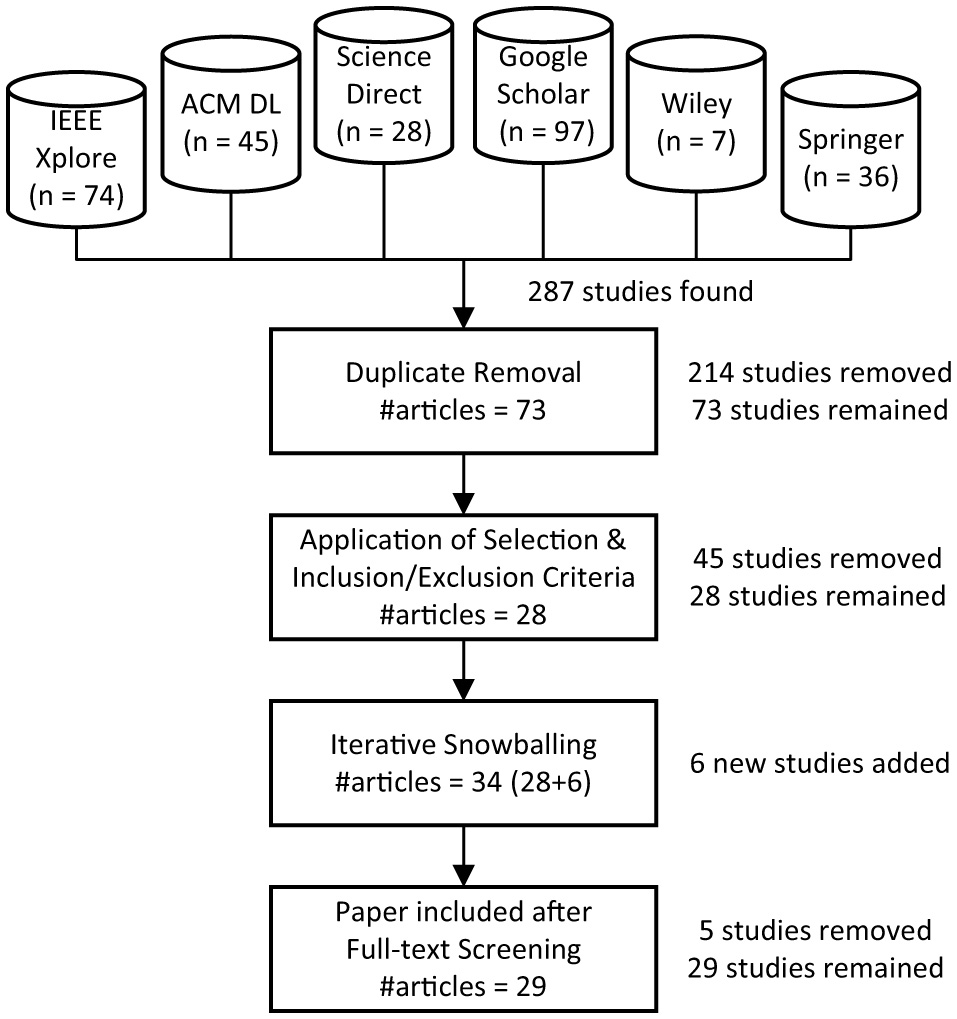
Research directions for using LLM in software requirement engineering: a systematic review
IntroductionNatural Language Processing (NLP) and Large Language Models (LLMs) are transforming the landscape of software engineering, especially in the domain of requirement engineering. Despite significant advancements, there is a notable lack of comprehensive survey papers that provide a holistic view of the impact of these technologies on requirement engineering. This paper addresses this gap by reviewing the current state of NLP and LLMs in requirement engineering.MethodsWe analyze trends in software requirement engineering papers, focusing on the application of NLP and LLMs. The review highlights their effects on improving requirement extraction, analysis, and specification, and identifies key patterns in the adoption of these technologies.ResultsThe findings reveal an upward trajectory in the use of LLMs for software engineering tasks, particularly in requirement engineering. The review underscores the critical role of requirement engineering in the software development lifecycle and emphasizes the transformative potential of LLMs in enhancing precision and reducing ambiguities in requirement specifications.DiscussionThis paper identifies a growing interest and significant progress in leveraging LLMs for various software engineering tasks, particularly in requirement engineering. It provides a foundation for future research and highlights key challenges and opportunities in this evolving field.

27,275 views

81 citations

ORIGINAL RESEARCH
20 June 2025
A hierarchical multi-class classification system for face and text datasets
Ashish Saini, 3 more and Fernando Moreira

3,071 views