SC
sally christine reynolds
Bournemouth University
Poole, United Kingdom
2,613
Total downloads
11k
Total views and downloads
Submit your idea
You will be redirected to our submission process.
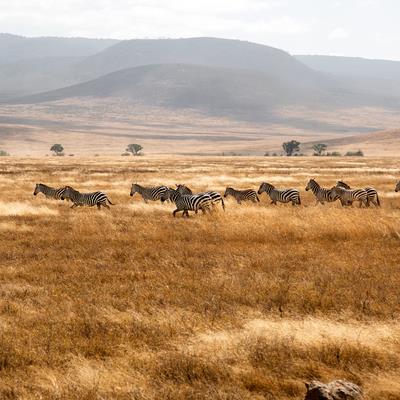
The study of ancient terrestrial migrations is a crucial aspect of understanding hominin and human adaptations, as it provides insights into how early humans interacted with their environments. By reconstructing ancient ecosystems, researchers can establish causal links between climate changes and the adaptive behaviors of hominins, such as tool use, bipedality, and hunting strategies. Recent studies have highlighted the importance of mobility, not only of hominins but also of prey animals, in shaping these adaptations. Faunal migrations, particularly those of megafauna and grazing herbivores, played significant roles in their ecosystems, influencing hominin and human behaviors such as seasonal organization and resource scheduling. Techniques like stable isotope analyses have been instrumental in studying these migrations, offering a glimpse into the mobility patterns of ancient animals. Despite these advancements, there remains a need for more comprehensive research to fully understand the complex interactions between ancient human populations and their prey, as well as the broader ecological dynamics at play.
This research topic aims to deepen our understanding of ancient terrestrial migrations and their implications for hominin and human behavior. By focusing on the migratory ecology of extinct species and their interactions with early humans, the research seeks to answer key questions about the role of animal mobility in shaping human adaptations. The goal is to synthesize current knowledge, identify gaps, and propose new directions for future research, ultimately contributing to a more detailed understanding of ancient ecosystems and human-prey relationships.
To gather further insights into the migratory ecology of ancient species and their links to hominin and human behavior, we welcome articles addressing, but not limited to, the following themes:
- Migration of extinct megafauna (e.g., mammoths)
- Migration of caribou and reindeer (Rangifer) and their relationships to humans and extinct hominins
- Pleistocene grazer ecosystem reconstruction
- Changes in mobility of ungulate populations across major climatic shifts
- Animal mobility and human resource scheduling
- Migration of mobile resources (e.g., mammals, fish) globally
We encourage submissions that explore these themes from various geographic regions and perspectives, including Perspective, Opinion, Review, and Original Research articles. Informal queries from prospective authors are also welcome to ensure their work aligns with the envisioned scope of this collection.
This Research Topic accepts the following article types, unless otherwise specified in the Research Topic description:
Articles that are accepted for publication by our external editors following rigorous peer review incur a publishing fee charged to Authors, institutions, or funders.
Keywords: Paleoecology, Paleoenvironmental reconstruction, Herbivore migration, Hominin mobility, Animal migration, Ancient prey migration, Stable Isotope, Strontium isotope, Human-prey relationship
Important note: All contributions to this Research Topic must be within the scope of the section and journal to which they are submitted, as defined in their mission statements. Frontiers reserves the right to guide an out-of-scope manuscript to a more suitable section or journal at any stage of peer review.
Manuscripts can be submitted to this Research Topic via the main journal or any other participating journal.
Submit your idea
You will be redirected to our submission process.
