Abstract
The MEGA Lab uses branding and marketing techniques as a complementary form of science communication to improve citizen science. Storytelling, inclusivity, personalization, digital marketing, and collaborations are key components to brand marketing. Through branding, science projects within the MEGA Lab have increased their visibility, attracted more participants, and enhanced credibility. In addition, the MEGA Lab branding can also help citizen science projects to reach a wider audience. By promoting the MEGA Lab brand through social media, outreach events, and other channels, citizen science projects can increase inclusivity by attracting more participants who are interested in contributing to scientific research. We believe that other science research programs and citizen science projects can benefit from branding as a complementary form of science communication. By improving science communication, it is proposed that targeted citizen science projects can improve their visibility, credibility, and impact. This can lead to more effective and valuable contributions to scientific research, as well as a greater understanding and appreciation of science among the general public.
Introduction
We cannot do it alone. Science that is. More specifically, we scientists cannot do our research without funding, equipment, infrastructure and perhaps most importantly, data. As society rapidly sprints towards the 22nd century, data acquisition methods are becoming increasingly diverse especially within the environmental sector. Citizen science (CS), the intentional contribution of data by non-formally trained scientists, presents a highly innovative and practical form of data capture and processing (Silvertown, 2009; Tulloch et al., 2013; Bonney et al., 2014; Theobald et al., 2015; Bonney et al., 2016; Iyengar and Massey, 2019). Like the latest mass spectrometer or a genome visualization program, CS joins the chat as a potentially low cost, highly impactful and data rich source for making new discoveries.
CS has already proven to be highly impactful in the fields of ecology, astronomy, microbiology and social science with projects ranging from simple observations and data collection to more complex experiments and analyses (Dickinson et al., 2012; Marshall et al., 2015; Palmer et al., 2017; Pocock et al., 2017; Tauginienė et al., 2020). So if CS is so valuable, why is not it included into more research methodologies? Some limitations of CS that may have researchers slow to adopt include concerns around data quality, bias, resources, ethics, and also participation (Bubela et al., 2009; Robinson et al., 2021; West et al., 2021; Fritz et al., 2022; Hart et al., 2022; Hart et al., 2022; Hart et al., 2022). Since citizen scientists may not have conventional training, human error may dramatically increase during data collection if quality control methods are not implemented (Wiggins et al., 2011; Kosmala et al., 2016; Downs et al., 2021). CS can often bias towards certain populations that misrepresent data (Pandya, 2012). For example, more data may be acquired if methods are biased towards cell phone usage, which in turn will bias CS data towards individuals with access to cellular technology. The resources of CS are often heavily reliant on volunteer infrastructure and technical support. Budgetary restrictions may serve as an entry barrier for researchers to involve themselves in CS. The ethics or considerations that address privacy, confidentiality and informed consent can also hinder researchers from implementing CS into their research workflow (Angrist, 2009; Resnik et al., 2015; Rothstein et al., 2015). One of the fundamental pillars of CS is the need for volunteer participation. This often relies on the willingness and availability of volunteers to engage in a research topic. A significant bottleneck to CS effectiveness is the difficulties of attracting and retaining volunteers (Dickinson et al., 2010; Kobori et al., 2016; Brouwer and Hessels, 2019; Liñán, 2022, 2023).
Despite the drawbacks of CS in science research today, there is a consensus among many across the science community that obtaining more data has great benefit for any research program. And by increasing diverse and inclusive methods of CS participation, research programs can elevate their potential for scientific impact beyond academia alone and into the general public. Although there are many different methods that can elevate CS participation through incentives (Aceves-Bueno et al., 2015; See et al., 2016; Weber et al., 2019), improving accessibility (Roger et al., 2019; King et al., 2020; Roche et al., 2020), collaboration (Rotman et al., 2012; Kaufman et al., 2017; Guerrini et al., 2018), gamification (Bowser et al., 2013; 2014; Eveleigh et al., 2013), and science communication (Hecker, 2018; Batsaikhan et al., 2020), here we propose a underutilized method, branding and marketing techniques as a complementary form of science communication to improve citizen science.
Branding and marketing science communication
In particular, science communication can lead to increased participation in CS (Holliman et al., 2009; Luís et al., 2022). Science communication focuses on sharing scientific ideas, concepts and results to broader audiences both in and out of the scientific community (Burns et al., 2003; Bubela et al., 2009; Fischhoff, 2013). Different mediums of science communication can be implored such as written, oral, visual, digital, phonetic, and sensoratory (Fischhoff, 2013). Effective science communication methods raise awareness by providing greater accessibility, engagement, storytelling and outreach than most traditional scientific publications. An emerging method of science communication comes in the form of sharing a scientific story, idea or objective as if it were a brand (Maclachlan, 2016; Hotez, 2018).
By developing strong research narratives that highlight organization and identity, research programs can leverage the power of brand marketing. Storytelling, inclusivity, personalization, digital marketing, and collaborations are key components to brand marketing (Herskovitz and Crystal, 2010; Kannan and Li, 2017; Chandra et al., 2022; Ibáñez-Sánchez et al., 2022; Lucarelli, 2022). Storytelling techniques allow for science concepts to be more relatable to a broader audience. Using narratives, characters, emotions and places, researchers can form connections between science and an individual’s interest. By illustrating that scientific participants come from different backgrounds, it promotes a message of inclusivity and diversity for individuals to feel safe in a scientific setting. Personalization is important in the targeting of a specific audience based on interests, behavior and demographics. When messaging is tailored to different groups of people, engagement and relevance among audiences can increase. Digital marketing utilizes multimedia channels such as social media, search engines, and email marketing to broaden the reach of a particular campaign or narrative. Data analytics, also known as key performance indicators such as following, subscribers, views, shares, likes and impressions can support researchers in discovering what methods of communication are most effective when engaging new audiences. Collaborations with corporate organizations, influencers and celebrities can increase the reach of a particular scientific message or narrative further diversifying broader audience capture.
The MEGA lab
The multiscale environmental graphical analysis (MEGA) lab is a Hawaii based research group that specializes in producing novel scientific research while broadening the aperture for scientific participation (Figure 1). The lab initiated as an interdisciplinary and interinstitutional research group led by faculty at the University of Hawaiʻi at Hilo, University of Hawaiʻi at Mānoa, and Arizona State University and has also established an independent non-profit organization to expand its capacity to connect with broad audiences. The mission of MEGA Lab is to develop new technology to improve ocean research and provide that technology to communities who may need it the most. The lab includes five academic professors, three tenured-track, one research and one associate professor, three PhD students, four masters students, ten undergraduate students, an event space builder, and two multimedia creators.
FIGURE 1

Previously an early-century furniture store, the MEGA Lab now occupies the second floor of the Mokupapapa Marine Discovery Center. Open to the public at no cost, it provides opportunities for visitors to engage in scientific observation, communication, and exploration.
Examples of branding and marketing used by the MEGA lab
In the brand development of MEGA Lab, storytelling plays a vital role (Figure 2). Developing a strong brand narrative can heavily influence the rest of the brand marketing strategy. The lab aims to change the way people experience science by showcasing that individuals from diverse backgrounds can use science to create innovative solutions to protect the planet. The lab specializes in ocean research, with storytelling focused upon projects related to the changing climate, marine ecosystems, and the interactions between humans and the environment. To achieve its goals, MEGA Lab supports, trains, and partners with creative individuals to develop new ways to protect the planet and the communities that inhabit it. By emphasizing storytelling in brand development, MEGA Lab can communicate the importance of science in protecting the planet to a broader audience and inspire more people to take action.
FIGURE 2
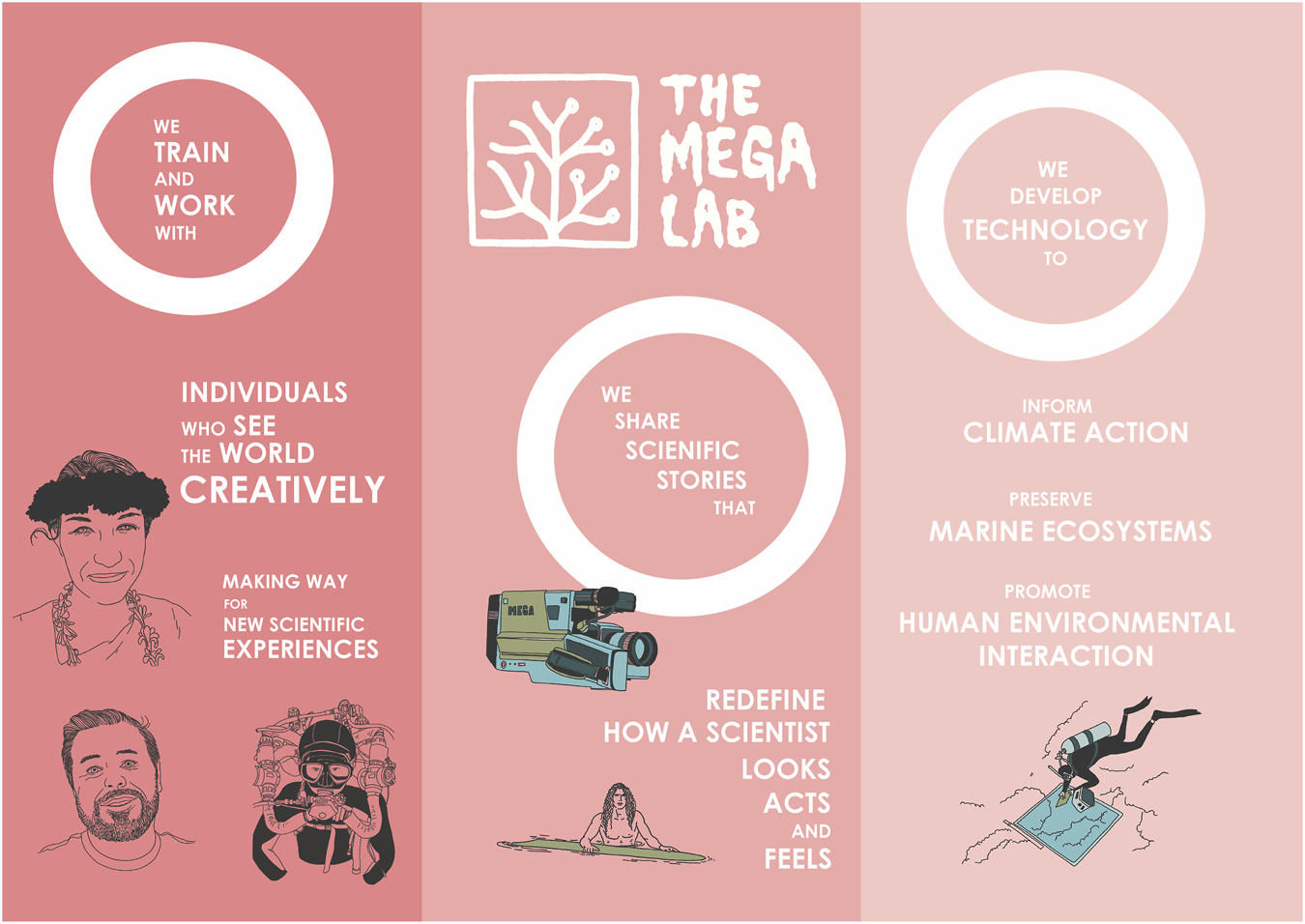
The Multiscale Environmental Graphical Analysis (MEGA) Lab focuses on scientific training, communication, and research through the use of multimedia, branding and original artworks.
For example, MEGA Lab prioritizes inclusivity and personalization by utilizing a key storytelling element that surfers, skaters, and artists can protect the planet. Members of the surf, skate and art community are often creative, passionate and dedicated to their discipline. Moreover, these seemingly distinct areas frequently intersect, creating interdisciplinary connections that extend across the boundaries of land and sea, as well as indoor and outdoor environments. Although the similarities among creatives demonstrate strong potentials towards developing solutions towards complex environmental disturbances, many surfers, skaters and artists do not see themselves as scientists or receive scientific encouragement. The MEGA Lab recognizes the potential of these individuals and seeks to provide conventional scientific training to them. With opportunities in scientific research that focus on environmental issues, MEGA Lab is using CS to target groups that possess unique perspectives and deliver fresh approaches that traditional scientists may not have considered. MEGA Lab demonstrates through CS, research and training that science is for everyone, even those who do not traditionally consider themselves scientifically literate.
MEGA Lab branding is shared through various digital platforms such as social media, original short films, photography, filmmaking, and podcasts to reach wider audiences and share its message. By developing different content specifically for different applications, MEGA Lab is able to tailor its messaging to specific audiences and channels.The lab also partners with news outlets, radio, and surf skate and art publications to share its message.
In addition to developing original content around the MEGA Lab’s mission, we have created an underwater livestream camera that provides audiences online with 24 h surveillance of the reef. Using online metrics we are able to quantify public engagement including citizen scientists. Since its establishment in 2021, there are currently 10,700 viewers have subscribed resulting in over 1.5 million views and over 700,000 h of watch time. Average watch time of the live stream is approximately 27 min each day. A majority of audiences are based in the US (71.6%), and the remaining audiences are from Canada (4.2%), the United Kingdom (3.8%), Japan (3.0%), German (1.8%), Brazil (1.6%), Russia (0.9%), Australia (0.7%), India (0.6%), France (0.6%), Netherlands (0.4%), Italy (0.4%), Spain (0.3%), Mexico (0.3%), Taiwan (0.3%), Poland (0.2%), Aotearoa (0.2%), Indonesia (0.2%), Argentina (0.1%), Sweden (0.1%), Austria (0.1%), Denmark (0.1%), South Africa (0.1%), South Korea (0.1%), Ukraine (0.1%), and Finland (0.1%). Interestingly, a majority of these viewers are between the ages of 55–64 (28.1%) and are male (57.3%). While viewing the live stream, audiences transitioned from being passive viewers to CS themselves as they began voluntarily commenting on marine species identification without a prompt. This has led to new datasets that highlight never before seen behavior and presence of marine life on Hawaii Island.
The MEGA Lab believes in the importance of traditional and non traditional partnerships when executing brand strategy. Although non-traditional forms of collaboration are important to the values and ethos of MEGA Lab, members of the broader scientific community still need to see that MEGA Lab is a successful research lab that has the capacity to gain support from national endowments or granting agencies. That being said, MEGA Lab invests time and resources into national partnerships that stem from successful grant opportunities from the National Aeronautics and Space Administration (NASA), the National Science Foundation (NSF), the United States Fish and Wildlife Service (USFWS), the Department of Defense (DOD), the National Park Service (NPS) and Burroughs Wellcome Fund. MEGA Lab also collaborates with organizations and corporations that align with its messaging. For example, the MEGA Lab has a multi-year partnership with REEF footwear as a corporate collaborator to mutually elevate conversations around reef conservation, research and protection. REEF supports three main pillars of MEGA Lab’s work by investing in MEGA Lab scientist’s ability to maintain professional surfing status, supporting MEGA Cam live stream marketing efforts, and most notably partnering with MEGA Lab to perform original research destined for peer-review. As far as we are aware at the time of this publication REEF is the first surf company to invest this way into a research lab. In partnership with REEF, over 100,000 individuals have viewed the MEGA Cam livestream (https://themegalab.org/livestream) and we have mapped over 20,000 ft2 of reef at some of the best surf breaks around the world.
The MEGA Lab - REEF partnership has become a model relationship that demonstrates the feasibility and scalability for corporate partners in the outdoor recreation space to invest into science research to increase ocean protection and awareness (Figure 3). A recent trip to a famous surfing destination Nakurukurumailangi, Fiji also known as Cloudbreak, was funded primarily by REEF footwear to characterize the reef ecosystem. In addition to the data collected, REEF invested into a marketing campaign and media partnerships that introduced the broader surf community to the concept of indigenous research and marine photogrammetry. A 20-min documentary campaign was also created and accepted into several film festivals eventually finding a distribution home on both Surfline and Outside TV’s Dispatches program garnering over 340,000 views to date.
FIGURE 3
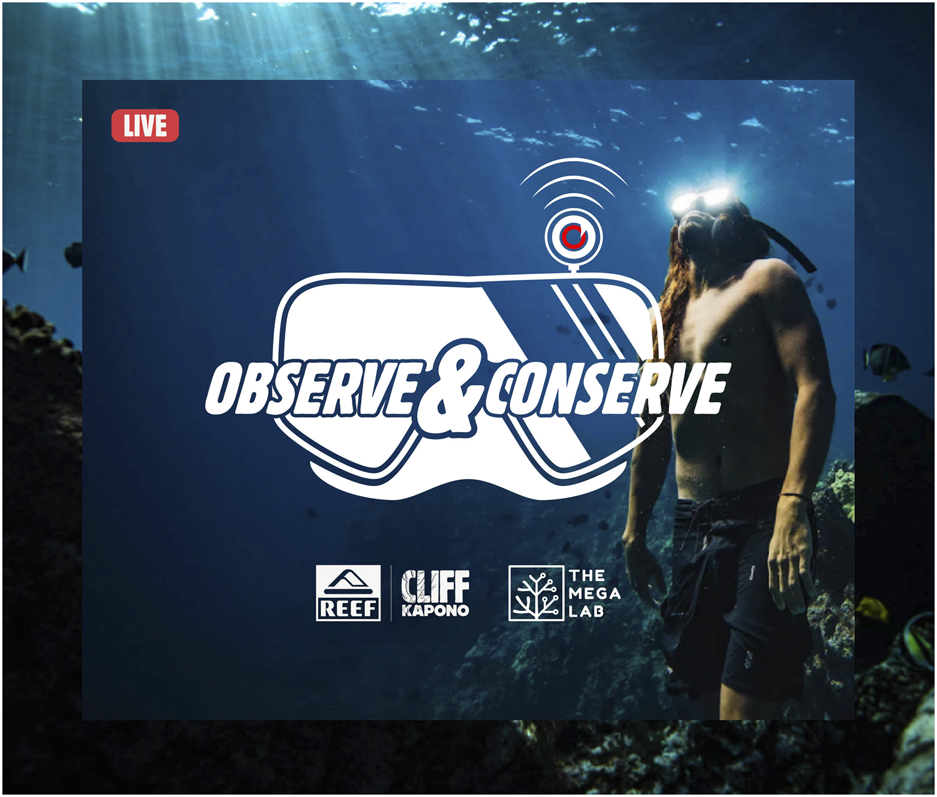
Working closely with industry partners such as Reef footwear to develop branded content, the MEGA Lab has created a branding niche that is widely celebrated within the surf industry.
Since its release the “Mapping the Reef: Cloudbreak” research project has reached over 30 million impressions across multiple online platforms, over 1,000 in person, provided research training for 6 graduate students and a forthcoming research paper is currently in preparation. The project has also been celebrated in several news and entertainment periodicals including The Fiji Times, Hilo Union Tribune, Wavelength Surf Magazine, KHON2 News, ASU News, and UH News. As a result, the MEGA Lab was awarded an impact grant by the World Surf League, the governing body of professional surfing. With partnerships from GoPro camera systems, this grant will be used to create do it yourself, “DIY,” mapping kits that will be used next year to map the reefs on the North Shore of Hawaii by visiting athletes and local community members.
Conclusion
The effort required to invest into market branding for both a research program and project can be overwhelming. At times it might also seem tangential to the trajectory many researchers believe their career must take them. Although including brand marketing into science research strategy is less common, this underutilized tool certainly has complementary value to traditional methods of science communication. Challenges still exist within the research community as to whether these methods deem valuable and align with overall research goals. Additionally, evaluation metrics to determine effectiveness remain unclear. The data that the MEGA lab focuses on in this perspective piece, is the media engagement metrics and subscription following across social media. For example, the MEGA cam live stream has provided access to ocean observation and engagement to over 25 countries around the world with a base audience of at least 10 people in each location. From these live streams, active engagement of audiences in the chat and comment section resulting in over 220,000 comments that describe animal presence, behavior and even absence.
The overall goal of this piece is to propose an alternative and seemingly effective means of branding a lab through the use of digital marketing. Although an extensive evaluation of the effectiveness has not been established in this paper, the authors propose a unique branding structure that results in active engagements of non-science users across the digital space. As demonstrated by the MEGA Lab, operating in the space of branding can lead to increased opportunities for involving citizen scientists where we have never looked before. Future efforts of the MEGA lab will include the exploration into the effectiveness of broader community engagement through live events, ambassadorship collaborations, and incentivized subscriptions.
Statements
Data availability statement
The original contributions presented in the study are included in the article/supplementary material, further inquiries can be directed to the corresponding author.
Author contributions
CK conceived of the idea in discussion with HK and JB drafted the manuscript with support, input and edits from HK and JB. CK produced all figures. All authors contributed to the article and approved the submitted version.
Acknowledgments
The MEGA Lab partners closely with the Mokupapa Marine Discovery Center and is a major supporter of public engagement. MEGA Lab also partners with Reef Footwear and Hydro Flask water bottles to provide scientific messaging to broader audiences.
Conflict of interest
Authors CK, HK, and JB serve as board members of the MEGA Lab, but are not employed by the MEGA LAb.
Publisher’s note
All claims expressed in this article are solely those of the authors and do not necessarily represent those of their affiliated organizations, or those of the publisher, the editors and the reviewers. Any product that may be evaluated in this article, or claim that may be made by its manufacturer, is not guaranteed or endorsed by the publisher.
References
1
Aceves-BuenoE.AdeleyeA. S.BradleyD.Tyler BrandtW.CalleryP.FeraudM.et al (2015). Citizen science as an approach for overcoming insufficient monitoring and inadequate stakeholder buy-in in adaptive management: Criteria and evidence. Ecosystems18 (3), 493–506. 10.1007/s10021-015-9842-4
2
AngristM. (2009). Eyes wide open: the personal genome project, citizen science and veracity in informed consent. Pers. Med.6 (6), 691–699. 10.2217/pme.09.48
3
BatsaikhanA.HachingerS.KurtzW.HellerH.FrankA. (2020). Application of modern web technologies to the citizen science project BAYSICS on Climate Research and Science Communication. Sustain. Sci. Pract. Policy12 (18), 7748. 10.3390/su12187748
4
BonneyR.PhillipsT. B.BallardH. L.EnckJ. W. (2016). Can citizen science enhance public understanding of science?Public Underst. Sci.25 (1), 2–16. 10.1177/0963662515607406
5
BonneyR.ShirkJ. L.PhillipsT. B.WigginsA.BallardH. L.Miller-RushingA. J.et al (2014). Next steps for citizen science. Science343 (6178), 1436–1437. 10.1126/science.1251554
6
BowserA.HansenD.PreeceJ.HeY.BostonC.HammockJ. (2014). “Gamifying citizen science,” in Proceedings of the companion publication of the 17th ACM conference on Computer supported cooperative work and social computing - CSCW Companion ’14. the companion publication of the 17th ACM conference (New York, New York, USA: ACM Press). 10.1145/2556420.2556502
7
BowserA.HansenD.PreeceJ.HeY.BostonC.GunnellL.et al (2013). “Using gamification to inspire new citizen science volunteers,” in Proceedings of the first international conference on gameful design, research, and applications. Gamification ’13: Gameful design, research, and applications (New York, NY, USA: ACM). 10.1145/2583008.2583011
8
BrouwerS.HesselsL. K. (2019). Increasing research impact with citizen science: The influence of recruitment strategies on sample diversity. Public Underst. Sci.28 (5), 606–621. 10.1177/0963662519840934
9
BubelaT.NisbetM. C.BorcheltR.BrungerF.CritchleyC.EinsiedelE.et al (2009). Science communication reconsidered. Nat. Biotechnol.27 (6), 514–518. 10.1038/nbt0609-514
10
BurnsT. W.O’ConnorD. J.StocklmayerS. M. (2003). Science communication: A contemporary definition. Public Underst. Sci.12 (2), 183–202. 10.1177/09636625030122004
11
ChandraS.VermaS.LimW. M.KumarS.DonthuN. (2022). Personalization in personalized marketing: Trends and ways forward. Psychol. Mark.39 (8), 1529–1562. 10.1002/mar.21670
12
DickinsonJ. L.ShirkJ.BonterD.BonneyR.CrainR. L.MartinJ.et al (2012). The current state of citizen science as a tool for ecological research and public engagement. Front. Ecol. Environ.10 (6), 291–297. 10.1890/110236
13
DickinsonJ. L.ZuckerbergB.BonterD. N. (2010). Citizen science as an ecological research tool: Challenges and benefits. Annu. Rev. Ecol. Evol. Syst.41 (1), 149–172. 10.1146/annurev-ecolsys-102209-144636
14
DownsR. R.RamapriyanH. K.PengG.WeiY. (2021). Perspectives on citizen science data quality. Front. Clim.3. 10.3389/fclim.2021.615032
15
EveleighA.JennettC.LynnS.CoxA. L. (2013). “I want to be a captain! I want to be a captain,” in Proceedings of the first international conference on gameful design, research, and applications. Gamification ’13: Gameful design, research, and applications (New York, NY, USA: ACM). 10.1145/2583008.2583019
16
FischhoffB. (2013). The sciences of science communication. Proc. Natl. Acad. Sci. U. S. A.110 (3), 14033–14039. 10.1073/pnas.1213273110
17
FritzS.SeeL.GreyF. (2022). The grand challenges facing environmental citizen science. Front. Environ. Sci. Eng. China10. 10.3389/fenvs.2022.1019628
18
GuerriniC. J.MajumderM. A.LewellynM. J.McGuireA. L. (2018). Citizen science, public policy. Science361 (6398), 134–136. 10.1126/science.aar8379
19
HartA. G.AdcockD.BarrM.ChurchS.CleggT.CoplandS.et al (2022). Understanding engagement, marketing, and motivation to benefit recruitment and retention in citizen science. Citiz. Sci. Theory Pract.7 (1). 10.5334/cstp.436
20
HeckerS. (2018). Citizen science: Innovation in open science, society and policy. UCL Press.
21
HerskovitzS.CrystalM. (2010). The essential brand persona: storytelling and branding. J. Bus. strategy31 (3), 21–28. 10.1108/02756661011036673
22
HollimanR.LizW.EileenS.SamS. (2009). Investigating science communication in the information age: Implications for public engagement and popular media. Oxford: OUP.
23
HotezP. J. (2018). Crafting your scientist brand. PLoS Biol.16 (10), e3000024. 10.1371/journal.pbio.3000024
24
Ibáñez-SánchezS.FlaviánM.CasalóL. V.BelancheD. (2022). Influencers and brands successful collaborations: A mutual reinforcement to promote products and services on social media. J. Mark. Commun.28 (5), 469–486. 10.1080/13527266.2021.1929410
25
IyengarS.MasseyD. S. (2019). Scientific communication in a post-truth society. Proc. Natl. Acad. Sci. U. S. A.116 (16), 7656–7661. 10.1073/pnas.1805868115
26
KannanP. K.LiH. A. (2017). Digital marketing: A framework, review and research agenda. Int. J. Res. Mark.34 (1), 22–45. 10.1016/j.ijresmar.2016.11.006
27
KaufmanA.WilliamsR.BarzykT.GreenbergM.O'SheaM.SheridanP.et al (2017). A citizen science and government collaboration: Developing tools to facilitate community air monitoring. Environ. justice10 (2), 51–61. 10.1089/env.2016.0044
28
KingA. C.KingD.BanchoffA.SolomonovS.Ben NatanO.HuaJ.et al (2020). Employing participatory citizen science methods to promote age-friendly environments worldwide. Int. J. Environ. Res. public health17 (5), 1541. 10.3390/ijerph17051541
29
KoboriH.DickinsonJ. L.WashitaniI.SakuraiR.AmanoT.KomatsuN.et al (2016). Citizen science: a new approach to advance ecology, education, and conservation. Ecol. Res.31 (1), 1–19. 10.1007/s11284-015-1314-y
30
KosmalaM.WigginsA.SwansonA.SimmonsB. (2016). Assessing data quality in citizen science. Front. Ecol. Environ.14 (10), 551–560. 10.1002/fee.1436
31
LucarelliA. (2022). Inclusivity as civism: theorizing the axiology of marketing and branding of places. Qual. Mark. Res. Int. J.25 (5), 596–613. 10.1108/qmr-01-2022-0011
32
LuísC.NavalhasI.EstherM. G.JoanaM. (2022). “Keeping participants engaged in citizen science projects: the role of science communication strategies,” in Proceedings of engaging citizen science conference 2022 — PoS(CitSci2022). Engaging citizen science conference 2022 (Trieste, Italy: Sissa Medialab). 10.22323/1.418.0017
33
MaclachlanJ. L. (2016). Using branding and social media for effective science communication, Paperpile. Available at: https://paperpile.com/app/p/75a05544-4686-04a4-9df0-0fa5d850614e.
34
MarshallP. J.LintottC. J.FletcherL. N. (2015). Ideas for citizen science in astronomy. Annu. Rev. astronomy astrophysics53 (1), 247–278. 10.1146/annurev-astro-081913-035959
35
PalmerJ. R. B.OltraA.CollantesF.DelgadoJ. A.LucientesJ.DelacourS.et al (2017). Citizen science provides a reliable and scalable tool to track disease-carrying mosquitoes. Nat. Commun.8 (1), 916. 10.1038/s41467-017-00914-9
36
PandyaR. E. (2012). A framework for engaging diverse communities in citizen science in the US. Front. Ecol. Environ.10 (6), 314–317. 10.1890/120007
37
PocockM. J. O.TweddleJ. C.SavageJ.RobinsonL. D.RoyH. E. (2017). The diversity and evolution of ecological and environmental citizen science. PloS one12 (4), e0172579. 10.1371/journal.pone.0172579
38
ResnikD. B.ElliottK. C.MillerA. K. (2015). A framework for addressing ethical issues in citizen science. Environ. Sci. policy54, 475–481. 10.1016/j.envsci.2015.05.008
39
RobinsonJ. A.KocmanD.SpeyerO.GerasopoulosE. (2021). Meeting volunteer expectations — a review of volunteer motivations in citizen science and best practices for their retention through implementation of functional features in CS tools. J. Environ. Plan. Manag.64 (12), 2089–2113. 10.1080/09640568.2020.1853507
40
RocheJ.BellL.GalvãoC.GolumbicY. N.KloetzerL.KnobenN.et al (2020). Citizen science, education, and learning: Challenges and opportunities. Front. Sociol.5, 613814. 10.3389/fsoc.2020.613814
41
RogerE.TurakE.TegartP. (2019). Adopting citizen science as a tool to enhance monitoring for an environment agency. Citiz. Sci. Theory Pract.4 (1). 10.5334/cstp.231
42
RothsteinM. A.WilbanksJ. T.BrothersK. B. (2015). Citizen science on your smartphone: An ELSI research agenda. J. law, Med. ethics a J. Am. Soc. Law, Med. Ethics43 (4), 897–903. 10.1111/jlme.12327
43
RotmanD.PreeceJ.HammockJ.ProcitaK.HansenD.ParrC.et al (2012). “Dynamic changes in motivation in collaborative citizen-science projects,” in Proceedings of the ACM 2012 conference on computer supported cooperative work. CSCW ’12: Computer supported cooperative work (New York, NY, USA: ACM). 10.1145/2145204.2145238
44
SeeL.MooneyP.FoodyG.BastinL.ComberA.EstimaJ.et al (2016). Crowdsourcing, citizen science or volunteered geographic information? The current state of crowdsourced geographic information. ISPRS Int. J. geo-information5 (5), 55. 10.3390/ijgi5050055
45
SilvertownJ. (2009). A new dawn for citizen science. Trends Ecol. Evol.24 (9), 467–471. 10.1016/j.tree.2009.03.017
46
TauginienėL.ButkevičienėE.VohlandK.HeinischB.DaskoliaM.SuškevičsM.et al (2020). Citizen science in the social sciences and humanities: the power of interdisciplinarity. Palgrave Commun.6 (1), 89. 10.1057/s41599-020-0471-y
47
TheobaldE. J.EttingerA.BurgessH.DeBeyL.SchmidtN.FroehlichH.et al (2015). Global change and local solutions: Tapping the unrealized potential of citizen science for biodiversity research. Biol. Conserv.181, 236–244. 10.1016/j.biocon.2014.10.021
48
TullochA. I. T.PossinghamH. P.JosephL. N.SzaboJ.MartinT. G. (2013). Realising the full potential of citizen science monitoring programs. Biol. Conserv.165, 128–138. 10.1016/j.biocon.2013.05.025
49
WeberK.PallasF.UlbrichtM.-R. (2019). Challenges of citizen science: Commons, incentives, organizations, and regulations. Am. J. Bioeth. AJOB19, 52–54. 10.1080/15265161.2019.1619862
50
WestS.DykeA.PatemanR. (2021). Variations in the motivations of environmental citizen scientists. Citiz. Sci. Theory Pract.6 (1). 10.5334/cstp.370
51
WigginsA.NewmanG.StevensonR. D.CrowstonK. (2011). “Mechanisms for data quality and validation in citizen science,” in 2011 IEEE seventh international conference on e-science workshops. 2011 IEEE seventh international conference on e-science workshops (eScienceW), IEEE. 10.1109/esciencew.2011.27
Summary
Keywords
MEGA lab, science branding, SciComm, citizen science, science communication, science marketing
Citation
Kapono CA, Kane HH and Burns JHR (2023) Branding the MEGA lab; methods to improve science communication and citizen science engagement. Front. Environ. Sci. 11:1208683. doi: 10.3389/fenvs.2023.1208683
Received
19 April 2023
Accepted
04 September 2023
Published
18 September 2023
Volume
11 - 2023
Edited by
Joseph Roche, Trinity College Dublin, Ireland
Reviewed by
Jaume Piera, Spanish National Research Council (CSIC), Spain
Serena Lucrezi, North-West University, South Africa
Carla Morais, University of Porto, Portugal
Updates
Copyright
© 2023 Kapono, Kane and Burns.
This is an open-access article distributed under the terms of the Creative Commons Attribution License (CC BY). The use, distribution or reproduction in other forums is permitted, provided the original author(s) and the copyright owner(s) are credited and that the original publication in this journal is cited, in accordance with accepted academic practice. No use, distribution or reproduction is permitted which does not comply with these terms.
*Correspondence: Clifford A. Kapono, clifford.kapono@asu.edu
Disclaimer
All claims expressed in this article are solely those of the authors and do not necessarily represent those of their affiliated organizations, or those of the publisher, the editors and the reviewers. Any product that may be evaluated in this article or claim that may be made by its manufacturer is not guaranteed or endorsed by the publisher.